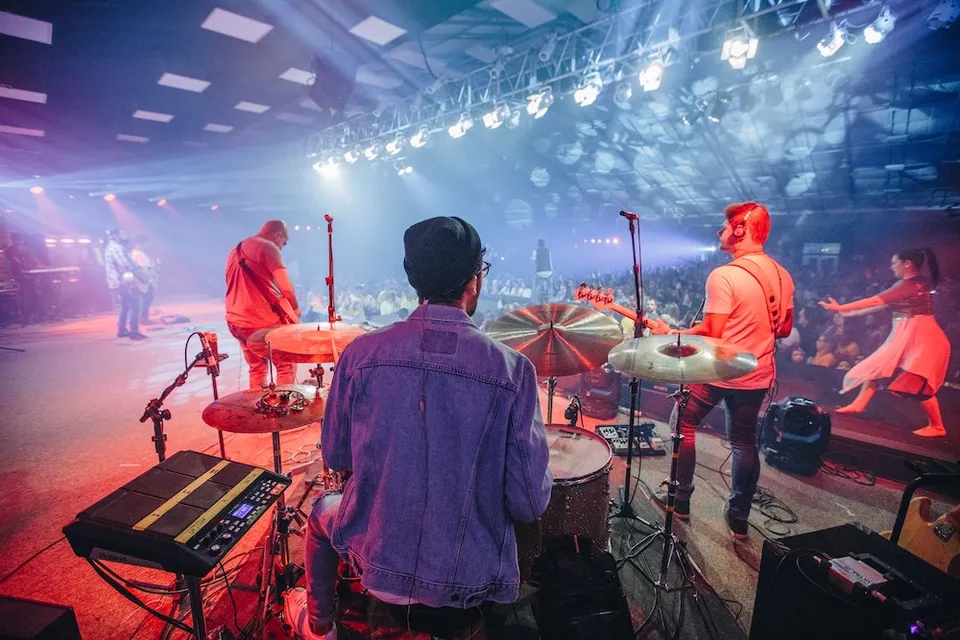
Studio 54 in central Exeter
Studio 54 is a central Exeter recording studio whose published equipment includes a Bentley upright piano. It is also the location given for Alex’s lessons, at 54 High Street. A lesson booking and a recording booking are separate arrangements: ask directly about studio availability, the instrument offered for your project and what engineering support is included.
Explain whether you want a solo piano recording, piano with a singer or a fuller arrangement. Send a rough reference if it helps describe the sound. Ask how much setup time is likely to be needed and whether the piano will be prepared for the session. The existence of an instrument on an equipment list does not establish its availability for every booking.
The Source Studios on South Street
Music in Devon’s Source Studios information describes recording and rehearsal spaces at Concorde House on South Street, Exeter, with equipment including pianos. The studio’s own project information also covers recording, mixing and mastering. Ask which room and instrument would suit your session, especially if you need a full-size weighted keyboard or a particular acoustic piano sound.
If you are rehearsing with a singer, check the microphone, PA and monitoring arrangements. If you plan to bring your own digital piano, confirm the available inputs, stand and power connections. Tell the studio how many people will attend and whether anyone needs step-free access. Those practical details affect the suitability of a room as much as photographs of the equipment.
Brazen Sound Studios
Brazen Sound Studios advertises recording and rehearsal facilities in Exeter, including a spinet piano and a selection of keyboards. Its website also describes parking and level loading access. Contact the studio to confirm the current equipment, booking terms and whether the piano or keyboard you want is included in the room you are considering.
Choose the space around your musical aim. A band rehearsal requires everyone to hear one another clearly; an exposed solo piano recording puts different demands on the instrument and recording setup. Ask the engineer how they would approach your project. You do not need to know microphone models, but it helps to explain whether you want a natural performance, layered parts or a produced song.
Prepare the music before the session
Practise the beginning, ending and transitions rather than only the comfortable middle of a piece. For an ensemble, agree the key, tempo and count-in in advance. Mark repeats and any cuts on your own copies of the music. If you intend to record to a click, spend time playing with one beforehand so the studio session is not your first encounter with it.
Make a short plan with a realistic priority: one piece recorded clearly can be more useful than several rushed attempts. Bring your scores, glasses if needed, and any pedal or adapter specifically agreed with the studio. Allow time to settle the bench height and try the instrument. A few minutes of adjustment can make it easier to play naturally once recording begins.
Agree what you will receive
Ask whether the quote covers room hire, an engineer, editing, mixing and file delivery, since these can be separate items. Discuss how revisions work, when you will receive the recording and which file formats you need. If other musicians are involved, agree how the recording may be shared. Keep written confirmation of the price, session length and cancellation arrangements.
Listen back with a specific question rather than judging yourself against a finished commercial release. Is the pulse steady? Does the melody stand out? Are the gaps between sections deliberate? A simple home recording can answer many of the same questions before you hire a studio. Bring an observation to lessons with Alex and choose one manageable improvement for your next performance.